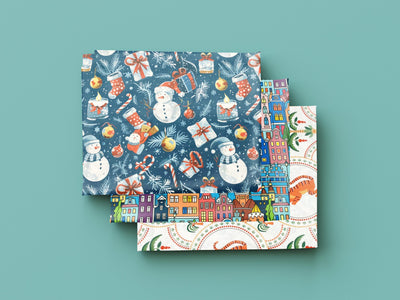
The best fabric for Halloween costumes is usually one of four: dress net for volume, satin for capes and shine, cotton poplin for anything that needs a proper shape, and craft felt for cut-out bones, bats and ears. Nearly every costume in this guide is two of those and nothing else. Under 4m of fabric, most of them.
The other thing worth saying first is a calendar point. Costumes get made in the last ten days of October, when everyone else is also buying black net and the postie is at their busiest. Fabric does not go off. Buy it in September, put it in a bag with the thread and the elastic, and sew it whenever the mood or the deadline arrives. A metre of black dress net bought on 20 September is the same metre it would have been on 29 October, minus the panic.
This guide is organised by fabric; what each one suits, how it behaves under the machine, and what a costume made from it actually costs. If you want the makes rather than the materials, the companion piece on easy Halloween sewing projects lists twelve of them grouped by how long they take. Everything in the Halloween fabrics range sits in the sort of price bracket that makes a spare metre a sensible idea rather than an extravagance.
Costume fabric safety: flammability and what the UK rules actually cover
This is the part to read properly, because it is the only part of costume sewing that can genuinely hurt someone.
Fabrics burn very differently from one another, and the difference matters more than most people expect. Polyester net, polyester satin and polyester lining melt: they shrink back from a flame, drip, and can stick to skin. Cotton and viscose do not melt — they catch and the flame spreads across the surface, faster if the cloth is light, loose and open-weave. A thin gauzy layer of anything ignites more readily than the same fibre in a dense weave. None of that makes one fibre categorically safe and another categorically dangerous, but it does mean "it's polyester so it won't burn" is wrong, and so is "it's cotton so it's fine".
The real risk at Halloween is rarely the fabric on its own. It is the shape of the costume near a naked flame. Long trailing sleeves, a floor-length cape, a wide net skirt and a hanging hood are all designed to move, and a tea light in a carved pumpkin sitting on a doorstep at ankle height is exactly the wrong height for a child in a full-length robe. If you change one thing this year, change the candles to battery LEDs and keep the costume off the ground.
On the legal side: in the UK, children's dressing-up costumes are treated as toys and fall under the toy safety regime, which sets flammability requirements for finished toys — the relevant flammability standard usually cited is BS EN 71-2. Separately, UK retailers adopted a voluntary industry code after 2014 under which children's dress-up costumes are additionally tested against a stricter rate-of-burn limit borrowed from the nightwear testing regime. Both of those apply to finished costumes placed on the market, not to dress fabric sold by the metre, and not to a costume you sew at home for your own child.
So what does that mean for you, practically?
- Do not assume any fabric is flame retardant. Some cloth is sold with a flame-retardant finish; most is not, and the finish is a treatment applied to a specific product, not a property of the fibre.
- Check the specific product listing and the label for flammability information before you buy fabric for a child's costume, and ask the seller if the listing does not say. This is a product-level question, not a fabric-type question.
- Read the official guidance rather than a blog. GOV.UK and the Office for Product Safety and Standards publish the current position on toy safety and children's costume flammability, and that is the source to rely on.
- Wash-and-care changes things. Where a flame-retardant finish exists at all, it can be reduced by laundering, particularly with fabric conditioner. The label tells you what it will survive.
Nothing on this page is a safety certification, and no fabric mentioned here is being claimed as compliant with any standard. What we can tell you is how each cloth sews and what it costs. The flammability question belongs to the individual product and to the official guidance.
The three habits that actually reduce risk
The costume fabric table: what suits what, and what it costs
Seven fabrics cover essentially the whole Halloween shelf. Prices below are worked examples at indicative rates — Pound A Metre ranges start from around £1/m and move up by range and print, so treat the pounds as maths you can redo with the live price, not as a quote.
| Fabric | Best for | How it sews | Typical width | Worked example rate |
|---|---|---|---|---|
| Dress net / tulle | Witch skirts, tutus, ghost veils, sleeve frills, volume under anything | Easiest fabric in this table. No hemming, no fraying, no pressing. Longest stitch length, walking foot if you have one | 150cm | £1/m |
| Polyester satin | Capes, cloaks, vampire linings, devil sashes, anything that must catch light | Slippery and frays hard. Pin every 5cm, new sharp needle, French seams or overlock. Press on low - it scorches | 150cm | £2.50/m |
| Cotton poplin | Witch dresses, pinafores, aprons, structured bodices, printed novelty pieces | The friendly one. Presses beautifully, holds a crease, sews at any speed | 112-150cm | £2/m |
| Craft felt | Bones, bats, cat ears, pumpkin faces, appliqué of every kind | Does not fray, so no hems and no edge finish. Cut with sharp scissors, glue or straight-stitch it down | 90-150cm | £2/m |
| Foil / metallic | Skeleton ribs, alien and robot panels, armour highlights, wet-look accents | Needle marks are permanent - pin inside the seam allowance only. Do not press directly, use a cloth | 140-150cm | £4/m |
| Velvet / velour | Vampire capes, medieval robes, anything that should look expensive on camera | Nap runs one way, so cut all pieces facing the same direction. Walking foot stops the layers creeping | 140-150cm | £4/m |
| Cotton jersey | Skeleton bodysuits, cat catsuits, morph-style base layers, comfortable kids' costumes | Ballpoint needle, narrow zigzag or overlock. Do not stretch it as you feed it | 150-180cm | £3/m |
Two notes on that table. First, widths vary between rolls and ranges, so check the listing before you do your metreage maths — a 112cm poplin and a 150cm poplin are not the same purchase. Second, the wider the fabric, the less of it you need for a circle skirt or a cape, which is why net and satin at 150cm are cheaper per costume than their price per metre suggests.
Choosing between net and satin for volume
Both create a silhouette, but differently. Net stands away from the body and holds itself up — three layers of it and you have a shape that survives a windy street. Satin has weight and falls, so it swings rather than stands. If the character is a witch, a fairy or a princess, you want net. If the character is a vampire, a reaper or a wizard, you want satin or velvet. Mixing them is where costumes start to look properly made: a satin overdress with two net layers underneath reads as tailoring, not as fancy dress.
Six costumes costed, start to finish
Every figure below assumes an adult of average height and a 150cm-wide fabric unless stated. Take roughly a third off the metreage for a child of 7 to 10. The pounds are worked examples at the indicative rates in the table above; the point is the ratio, not the receipt.
| Costume | Fabric | Metreage | At indicative rates | At £1/m across the board |
|---|---|---|---|---|
| Witch | Black cotton poplin dress 2m + black dress net skirt layers 2m + net sleeve frills 0.5m | 4.5m | £6.50 | £4.50 |
| Ghost | White cotton sheeting or poplin 3m, plus 0.3m black felt for the face | 3.3m | £6.60 | £3.30 |
| Vampire | Black satin cape 2.2m + red satin lining 2.2m + 0.3m stiff interfacing for the collar | 4.7m | £11.50 | £4.70 |
| Skeleton | Black cotton jersey top and leggings 2m + white felt bones 0.5m | 2.5m | £7.00 | £2.50 |
| Black cat | Black jersey 1.8m + 0.25m felt for ears + 0.3m for a stuffed tail | 2.35m | £6.50 | £2.35 |
| Grim reaper | Black cotton drill or heavy jersey hooded robe 3.5m + 0.5m contrast lining for the hood | 4m | £12.00 | £4.00 |
Six costumes, roughly 21m of fabric, and at the bottom of the range that is a shade over £21 for the lot. A single shop-bought adult costume of comparable size sits well above that — high-street costume prices were broadly in the £15 to £35 bracket at the time of writing, and that is indicative rather than a checked figure. The gap is the whole argument for sewing them.
Witch: the one everybody actually makes
The dress is two rectangles and two sleeves — you do not need a pattern. Cut the body to your chest measurement plus 15cm of ease, cut it long, and gather the net at the waist under it. Three net layers of decreasing length give you the ragged hem look without cutting a single hem. Sleeves are two long triangles set into a straight armhole; the point hangs to the wrist and swings. Total machine time is under two hours and the only fiddly bit is the waist gather.
Vampire cape: where the money goes and why it is worth it
A full-circle cape from 150cm satin needs a radius of about 110cm, which means 2.2m of length. Line it and you double that. The lining is not vanity: unlined satin flops, twists on the shoulders and shows every seam from the outside. A contrast red lining costs you the same metreage as the outer and turns a sheet into a cape. Satin is the classic here, but velvet reads better under phone flash if you have the budget for it.
The metreage rule for anything circular

No-sew and low-sew options for a Tuesday night panic
It is the 29th, the school has sent a letter, and the machine is under a pile of ironing. These are all achievable in an evening with scissors, fabric glue and at most a straight seam.
- Tie-on net skirt. Cut 1.5m of dress net into 15cm-wide strips about 60cm long. Knot each strip onto a length of ribbon or elastic. No stitching at all. 1.5m at £1/m is £1.50 and it takes about twenty minutes of knotting in front of the telly.
- Ghost with a face. A 2m length of white cotton sheeting, a hole cut for the head, and two ovals of black felt glued on. Felt does not fray so the eyes stay sharp. Around £2.30 of fabric.
- Felt skeleton front. Draw the ribcage on 0.5m of white felt with a marker, cut it out as one piece rather than as separate bones, and glue it to a black t-shirt the child already owns. £1 of felt, and it survives the night better than face paint does.
- Foil-panel robot. Cut rectangles of foil fabrics and glue them to a cardboard box or a plain sweatshirt. 0.5m goes a long way because you are cutting small panels.
- Hooded cape, one seam. A half-circle of satin, one straight seam at the centre back of a rectangular hood, and ribbon ties at the neck. One seam, fifteen minutes, and it reads as a proper cloak from three metres away.
The glue point matters: use a fabric glue rather than a hot glue gun on anything a child will wear, and let it cure properly before the costume goes on. Hot glue goes brittle in cold air and sheds in lumps by the second street.
Fabrics to avoid for costumes, and why
Not everything cheap is a good idea for a costume, and a few popular choices cause more trouble than they save.
- Heavy upholstery and curtain fabric. Tempting for robes because it looks rich, but the weight is punishing on a child, it does not gather, and a floor-length robe in it becomes a trip hazard by the third house.
- Very loose, open-weave gauze and cheesecloth for children. Fine as a ghost overlay on a mannequin; less good as a wearable layer, because loose open-weave cloth of any fibre ignites more readily than a dense weave of the same material.
- Sequin fabric on a young child. Sequins shed, scratch at the neck and wrist, and the loose ones end up somewhere you will not enjoy finding them. Save it for accents on adult builds — the best fabric for cosplay costumes guide covers where sequin genuinely earns its place.
- Anything that needs dry cleaning. A costume will meet mud, sweets and rain in one evening. If it cannot go through a 30°C wash, it is the wrong cloth for the job.
- Fleece for full-body costumes. It is warm, which sounds right for October, but a child walking briskly in a fleece bodysuit overheats within twenty minutes. Use jersey and put a jumper underneath.
- Novelty prints scaled for quilting on a big garment. A 2cm repeat pumpkin print looks like texture on a full-length robe rather than like pumpkins. Match print scale to garment size — there is more on this in choosing printed fabrics.
Buy 20cm more than the maths says
Costume seams get unpicked. Hoods get recut because the first one sat like a bonnet. Sleeves get shortened after a trial run. At £1 to £3 a metre, 20cm of insurance costs between 20p and 60p, and driving back for more fabric on 30 October costs an evening.
What to buy first if you are starting from nothing
If you want one shopping list that will cover most of what a household throws at you over a few Halloweens: 3m of black dress net, 2m of black cotton poplin, 2m of black satin, 1m of white felt and 0.5m of foil. That is 8.5m. At £1/m it is £8.50; at the mid rates in the table it lands closer to £22. From that pile you can build a witch, a ghost with felt features, a vampire cape, a skeleton front and a robot, and you will still have net left over for a tutu.
Black is the workhorse — buy more of it than you think — and white felt is the single most useful half-metre in the box, because bones, teeth, eyes and ghost faces all come out of it. If you are sewing for children, run the fabric choice past the same test you would use for any other garment they wear: comfort against the skin, a wash they can survive, and a weight suited to the weather. The same logic in choosing fabric for children's clothing applies just as well on 31 October as it does the rest of the year.
Frequently asked questions
What fabric is best for a witch costume?
Black cotton poplin for the dress body and black dress net for the skirt layers and sleeve frills. Poplin holds a shape and presses flat, net adds volume for pennies and never needs hemming. Around 2m of poplin and 2m of net covers an adult witch; at £1/m that is £4 of fabric.
What fabric do you use for a cape?
Satin if you want it to catch the light and swish, cotton drill or twill if you want it to hang heavy and still. A full-circle adult cape takes roughly 2.2m of 150cm-wide satin, doubled to 4.4m if you line it in a contrast colour. Satin frays hard, so overlock or French-seam every edge.
How much fabric do I need for a Halloween costume?
A child's costume is usually 1.5m to 2.5m. An adult costume is 2.5m to 4m, and a floor-length hooded robe or a full-circle cape pushes to 4.5m. Buy 20cm more than your pattern says: costume seams get taken in, hoods get remade, and 20cm is cheap insurance.
Is costume fabric flame retardant?
Not automatically, and you should never assume it. Fabrics burn very differently - synthetics such as polyester net and satin melt and shrink away, cottons flame and spread. Some fabrics are sold with a flame-retardant finish and most are not. Check the flammability information on the specific product listing and label before you buy for a child, and follow the official GOV.UK guidance on toy and costume safety.
What is the cheapest fabric for a costume?
Dress net and plain polyester lining are the cheapest costume fabrics by area, because both are wide, light and need no hemming. Craft felt is the cheapest for cut-out shapes such as bones, bats and ears - it does not fray, so one 0.5m piece does an entire skeleton front.