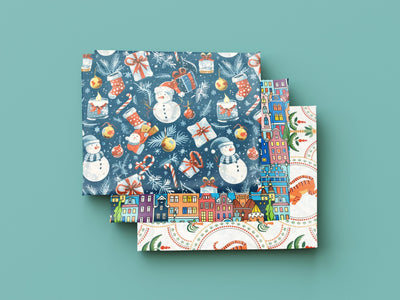
The easiest way to make a cushion cover is the envelope method: one square for the front and two overlapping pieces for the back, so the pad slips in through the gap and you do not need a zip. You cut three pieces, hem one edge of each back piece, lay them on the front, and sew round the outside. A 45cm cushion cover takes about half a metre of 140cm wide fabric and an hour or so at the machine. This guide gives cutting sizes for six common pad sizes, how much fabric each one needs, the steps in order, and how to add a zip instead.
Choose a medium-weight woven fabric that will stand up to being sat on and washed. Our furnishing fabrics are 140cm (55in) wide, which suits cushions well, because a front and two backs often fit side by side.
What you need
- Cushion pad: buy one, or make your own from calico and stuffing (see below).
- Fabric: the amount from the table below. Furnishing fabric, cotton canvas, velvet and quilting cotton all work.
- Basics: matching thread, pins or clips, fabric scissors, a tape measure, a ruler and an iron.
- Zip (optional): only if you are making the zip version. It should be about 5cm to 10cm shorter than the pad.
Measure the pad from seam to seam before you cut, rather than trusting the label. A "45cm" pad can measure 43cm or 47cm, and the cover should be cut to the real size. If an old pad has gone flat, open one seam and top it up with polyester stuffing before you measure.
Cushion cover sizes and how much fabric you need
The cutting sizes below include a 1cm seam allowance. The front is cut 1cm larger than the pad, so the finished cover is about 1cm smaller than the pad and the cushion looks full rather than baggy. Each back piece is the same width as the front and about half the pad height plus 10cm, which gives a generous overlap once the edges are hemmed.
| Pad size | Cut one front | Cut two backs | Fabric, 112cm (45in) wide | Fabric, 140cm (55in) wide |
|---|---|---|---|---|
| 30cm x 30cm | 31cm x 31cm | 31cm x 25cm | 0.35m | 0.35m |
| 40cm x 40cm | 41cm x 41cm | 41cm x 30cm | 0.8m | 0.5m |
| 45cm x 45cm | 46cm x 46cm | 46cm x 33cm | 0.8m | 0.5m |
| 50cm x 50cm | 51cm x 51cm | 51cm x 35cm | 0.9m | 0.9m |
| 60cm x 60cm | 61cm x 61cm | 61cm x 40cm | 1.5m | 1.1m |
| 30cm x 50cm (oblong) | 51cm x 31cm | 51cm x 25cm | 0.6m | 0.6m |
These amounts keep every piece the right way up, which matters for a print with an obvious top. With a plain fabric or an all-over print, you can turn the back pieces sideways and save fabric: a 40cm cover then fits on 0.5m of 112cm wide fabric, and a 50cm cover on 0.6m of 140cm wide. Curtains and cushions cut from the same fabric are planned together in how much fabric for curtains, and the complete UK fabric quantity guide has charts for other home projects.
For any other size, use the same sums. Front: pad width plus 1cm by pad height plus 1cm. Backs: pad width plus 1cm by half the pad height plus 10cm.
Choosing the fabric
| Fabric | Good for | Notes |
|---|---|---|
| Furnishing fabric | Sofa and armchair cushions | Made for home use; wide, so it cuts economically |
| Cotton canvas | Garden, kitchen and children's cushions | Hard-wearing and washable; use a size 90 or 100 needle |
| Velvet | Bedroom and living-room cushions | Rich colour; pin within the seam allowance, as pins can mark the pile |
| Quilting cotton | Patchwork fronts, seasonal covers | Easy to sew; back it with a heavier fabric for sofa cushions |
| Cuddle fleece | Soft cushions for beds and reading corners | Does not fray; cut with care as it sheds at the edges |
Velvet makes the most luxurious cover. Choose a non-stretch furnishing velvet from our velvet fabrics rather than a stretch spandex velvet, which can pull out of shape when the pad goes in. If you are unsure which pile fabric you have, the difference between velvet, velour and velveteen explains it.
For a cover that gets heavy use, such as a kitchen chair pad or a garden cushion, cotton canvas is the practical choice. For a soft, snuggly cushion, our cuddle fleece is quick to sew because the edges do not fray. A fleece cushion and a matching throw make a good set, and the best fabric for a blanket covers the throw.
Very fine dress fabrics, such as chiffon and lightweight viscose, are hard to handle and wear through quickly on a cushion. Fabric types beginners should avoid lists others to steer clear of for your first project.
Prewash cotton and canvas if the cover will go in the washing machine, because they can shrink slightly the first time and a shrunk cover will not fit the pad. How to wash fabric properly covers temperatures.
How to make an envelope cushion cover, step by step
- Cut the pieces. Cut one front and two backs to the sizes in the table. If the fabric has a pattern you want centred, such as a large flower, cut the front first and position it with care.
- Hem the back pieces. On each back piece, take one of the long edges, the edge that will sit in the middle of the cushion. Turn it 1cm to the wrong side and press, then turn a further 2cm and press again. Stitch close to the inner fold. Do the same on the second back piece.
- Lay out the cover. Place the front right side up. Lay the first back piece on top, right side down, with its raw edges level with the top of the front and its hemmed edge towards the middle.
- Add the second back. Lay the second back piece right side down, with its raw edges level with the bottom of the front. The two hemmed edges now overlap in the middle by about 13cm.
- Pin all round. Pin or clip the outer edges, paying attention to where the backs overlap, which is three layers thick. Understanding sewing pins and their uses explains which pins suit thick fabric.
- Sew round the edge. Sew all the way round with a 1cm seam, pivoting at each corner with the needle down. Backstitch over the overlap areas, as they take the most strain when the pad goes in.
- Trim the corners. Clip across each corner close to the stitching, without cutting it, so the corners turn out sharp. Zigzag or overlock the raw edges if the fabric frays.
- Turn and press. Turn the cover right side out through the envelope opening, push out the corners with a blunt point, such as a chopstick, and press.
- Insert the pad. Fold the pad in half, slip it through the opening and let it open out inside the cover.
If the opening gapes on a large cushion, sew a button and buttonhole, or a pair of snap fasteners, on the overlap. The envelope method needs only straight seams, which makes it a good first home-sewing project after a simple bag such as our drawstring bag guide.
How to make a cushion cover with a zip
A zip gives a neater back and a tighter fit. Cut a front and a single back, both the pad size plus 1cm, so a 45cm cushion needs two pieces 46cm x 46cm. You need a zip about 5cm to 10cm shorter than the pad, so 35cm to 40cm for a 45cm cushion.
- Neaten the bottom edge of both pieces with a zigzag or overlocker.
- Place the pieces right sides together. Along the bottom edge, sew from each corner towards the middle with a 1cm seam, leaving a gap the length of the zip teeth. Tack the gap closed with a long machine stitch.
- Press the seam open. Place the zip face down over the tacked section, teeth along the seam line, and pin it to the seam allowances.
- Using a zip foot, sew down one side of the zip, across the bottom, up the other side and across the top.
- Unpick the tacking stitches to reveal the zip, then open the zip halfway. This is important, as you will turn the cover through it.
- Put the pieces right sides together again and sew the other three sides. Clip the corners, turn the cover through the open zip, and press.
Our zips and trims are in the haberdashery section. Check the length before you buy, as many dressmaking zips are too short for anything bigger than a 30cm cushion.
Making your own cushion pad
If you have an odd-sized cover or want to save money, make the pad too. Cut two squares of plain cotton or calico 2cm larger than the finished cover, sew round the edges leaving a 10cm gap, turn them through and fill firmly with polyester stuffing. A 45cm pad takes roughly 400g to 500g of filling, so a 1kg bag fills two. Stuffing is sold by the kilo. Close the gap by hand with small slip stitches.
A homemade pad is a little less even than a feather or fibre pad, so tease out the filling and add it in small handfuls, pushing it well into the corners first.
Ideas for cushion fronts
- Patchwork: a 45cm front can be made from nine 16.5cm squares. A bundle of fat quarters gives you a set of coordinated prints; see our fat quarter bundles.
- Seasonal covers: an envelope cover is quick to swap, so it is easy to make a festive set for December from our Christmas fabrics and put it away after the holidays.
- Tartan: a classic for winter. Match the checks across the front and back for a neat finish; tartan fabric: 12 things to make covers how to line them up.
- Contrast backs: use a plain fabric for the backs and a more expensive print for the front, so a small piece goes further.
If you have one metre of fabric left from something else, a pair of cushion covers is one of the best uses for it. What you can make with 1 metre of fabric has more ideas.
What does a homemade cushion cover cost?
Here is a worked example using prices from our listings at the time of writing. Prices and offers change, so treat these figures as a guide.
| Item | Amount | Indicative cost |
|---|---|---|
| Furnishing fabric, 140cm (55in) wide, at £5/m | 1m (enough for two 45cm envelope covers) | about £5 |
| Thread | From your sewing box | about £1 |
| Total for two covers | about £6, or £3 a cover |
Add the cost of the pads if you are buying them, or about the price of a 1kg bag of stuffing for two homemade pads. Velvet or a large-repeat print will cost a little more, as you may need extra fabric to centre the design.
Cushion covers to sell
Cushion covers are a reliable seller at craft fairs, especially in seasonal prints and in pairs. Envelope covers are quick to batch-produce and easy to post because the buyer supplies the pad. The UK craft fair guide to sewing to sell covers pricing and stall planning.
Cushion cover FAQs
How much fabric do I need for a cushion cover?
For a 45cm envelope cushion cover, you need about 0.5m of 140cm wide fabric or 0.8m of 112cm wide fabric. That covers one front 46cm x 46cm and two backs 46cm x 33cm. A 40cm cover takes the same, and a 60cm cover needs 1.1m to 1.5m depending on the fabric width.
Should a cushion cover be smaller than the pad?
Yes, slightly. A cover about 1cm to 2cm smaller than the pad makes the cushion look plump. Cut the front 1cm larger than the pad and sew with a 1cm seam, and the finished cover will be about 1cm smaller.
How much overlap does an envelope cushion cover need?
Aim for an overlap of 10cm to 15cm, so the pad does not show through the opening. Cutting each back piece to half the pad height plus 10cm gives an overlap of about 13cm after hemming.
What is the best fabric for cushion covers?
Medium-weight furnishing fabric is the best all-rounder, as it is made for home use and wears well. Cotton canvas is best for heavy use, and velvet gives the most luxurious finish. See our upholstery fabrics for more options.
Can a beginner make a cushion cover?
Yes. The envelope method uses only straight seams and simple hems, with no zip to fit. Start with a 40cm or 45cm cover in a non-stretch cotton or furnishing fabric, and try the zip version once you are confident.